When the 'Too Expensive' Label Misses the French Heartland
Look beyond Paris and the Riviera: provincial streets, markets and provenance often deliver better everyday life and steadier value, says notarial data.
 Villa Curated
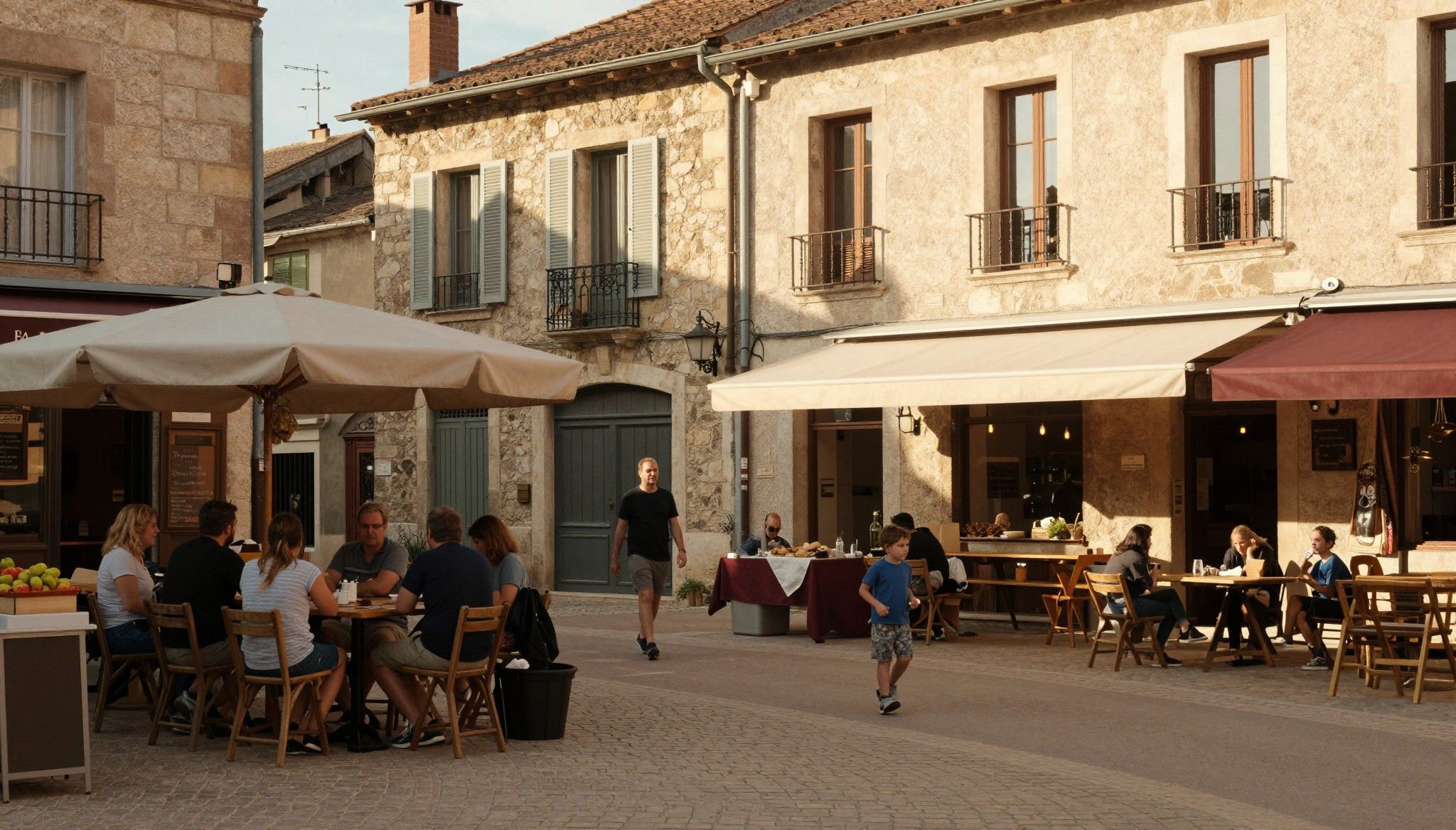
Imagine an autumn morning in a provincial marché: chestnuts roasting, a boulangerie queue spilling onto a limestone street, a vigneron setting out crates of Gamay. This is a France that travel brochures flatten into postcards, yet it is where a surprising portion of discerning buyers find the life — and value — they had assumed no longer existed. If the Côte d’Azur and central Paris form the visible summit of French desirability, the lesser-known valleys and towns often hold the deeper provenance, craftsmanship and price discipline that reward long-term stewards of property.
Living France: textures, rhythms and neighborhood character
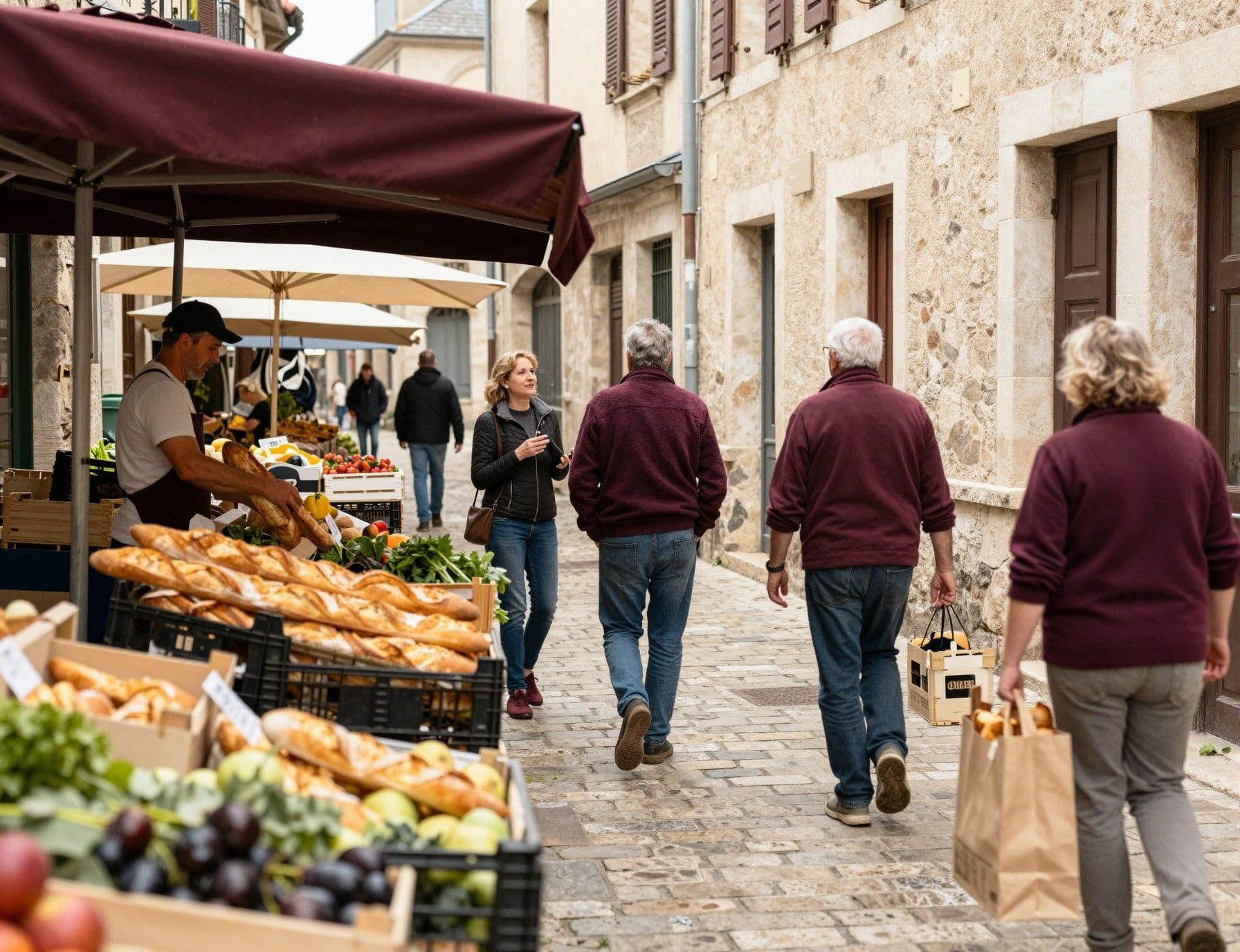
France feels lived in rather than staged. Streets are layered with history: wrought-iron balconies in Lyon’s Croix-Rousse, honey-stone façades in Bordeaux, shuttered timber cottages in the Dordogne. Neighborhood life is governed by markets, cafés and ritual — weekday boulangerie runs, Sunday morning marché visits, aperitif conversations on café terraces. These patterns shape how you inhabit a home: a kitchen sized for convivial cooking rather than a showpiece island, a ground-floor study for letters and remote work, a modest garden for herbs and a few vines.
Provenance and streets that matter
Provenance shows itself in things collectors notice: original oak beams, artisan plaster, 19th‑century cast iron staircases, or a mairie square where villagers gather. Look for streets where shops are family-run and have been for decades — rue des Trois Conils in small Bordeaux quarters, rue de la République in many provincial towns — because such continuity is a signal of social resilience and steady demand.
Food, markets and habitual life
Weeks in France are punctuated by market mornings and neighbourhood meals. From rue Cler in Paris to the Saturday market in Sarlat, these gatherings are a tangible asset: they sustain small businesses, encourage footfall and keep central streets occupied — factors that underpin property desirability even when national headlines focus on prime coastal prices. Recent notarial data show transaction volumes and price stability returning across many regions, a reminder that everyday life sustains value as much as headline glamour.
- Market‑day mornings at local marchés (Sarlat, Aix, Uzès)
- Café terraces where neighbours still talk by name (Marais-style squares to provincial place principals)
- Weekly artisans: bakers, butchers, cheesemongers whose permanence signals neighbourhood health
Making the move: matching style of life to property type
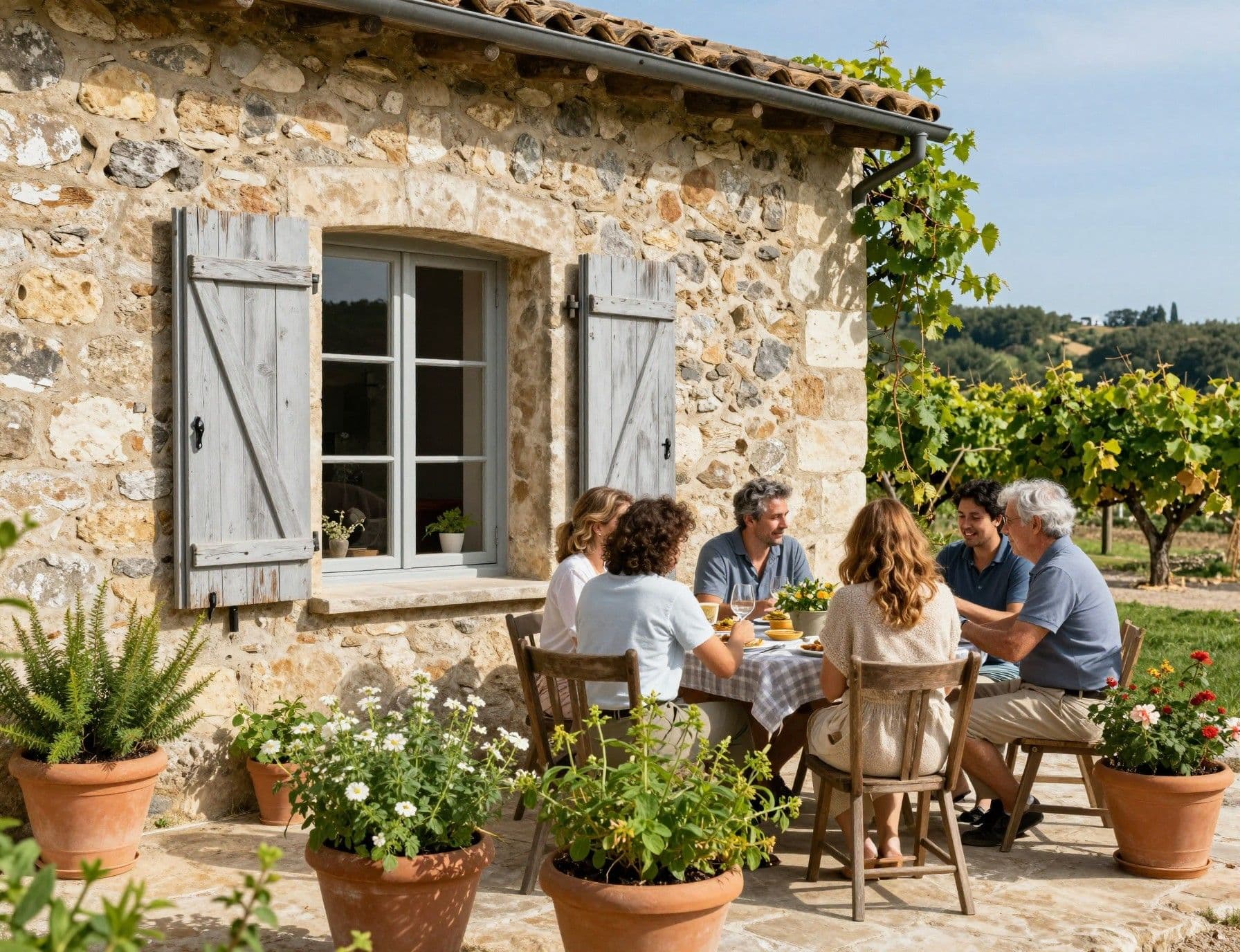
The pleasurable image of French life must be married to architectural reality. A stone farmhouse supports different habits than a Haussmann apartment. Decide which scenes — morning sunlight over a courtyard, a third‑floor salon with proportions and mouldings, a small orchard for weekend vegetables — will actually improve daily life before you start square‑metre arithmetic. Professional advice at this stage preserves the lifestyle you imagine and protects capital.
Property types and how they shape routines
Stone longère or bastide: slow, domestic life centred on gardens and convivial kitchens. Townhouse in a marché town: immediate social life, compact maintenance. Haussmann apartment: formal rooms, proximity to cultural institutions and private concierge patterns. Understanding the domestic choreography of each type — where laundry hangs, how deliveries arrive, how summer and winter living differ — clarifies whether a property will serve daily life or merely photograph well.
How local experts align lifestyle with the offer
- Engage an agent who reads neighbourhood life: 1) compile a short list of daily rituals you can’t surrender (market day, school run, train to Paris); 2) ask for streets, not just zones — stations and marché proximity matter; 3) request comparable sales that cite social anchors (long‑running shops, weekly events); 4) inspect properties at market times to sense foot traffic and evening calm.
Insider knowledge: what expats wish they’d known
Expat experience compresses into a few recurring lessons: the social capital of a good boulangerie is real; seasonal rhythms radically change a neighbourhood’s character; and modest towns often provide superior service networks for families and older buyers. Energy performance (DPE) increasingly affects value — buyers who overlook retrofit needs can find their lifestyle expectations impeded by cold winters or costly works.
Cultural integration and daily belonging
Language accelerates belonging; a few months of conversational French opens doors to neighbours, tradespeople and local committees. Attend local fêtes and marché days; these are the informal networks that smooth renovations, childcare swaps and the occasional vineyard tip. Expat enclaves exist — Aix, Antibes, parts of Dordogne — but the richest living comes from learning the local cadence rather than replicating an expatriate bubble.
Longer‑term stewardship: what to expect
Think in decades. Heritage materials age with dignity if maintained; modernity often requires cycles of intervention. Choose properties where investment improves both life and ledger — a modest energy retrofit that lowers running costs and increases winter comfort, or a careful garden restoration that amplifies summer use. Stewardship is part of the pleasure of owning in France.
- Inspect at different times (market morning, weekday evening, weekend) to understand rhythm
- Ask for neighbourhood provenance: how long shops have traded and whether community events persist
- Have a local architect or surveyor advise on DPE and fabric‑related works before offer
- A short buying checklist: 1) map daily life priorities; 2) shortlist streets not just towns; 3) commission an energy and structural review; 4) secure an agent who knows the market’s lived patterns; 5) visit in two seasons before committing.
By the time you sign, the right property will feel inhabited already: sunlight will land across the morning tiles where you imagined it, the nearby café will know your name, and the neighbourhood rituals will fit your day. For international buyers, the real advantage in France is less about headline prices and more about finding a street that sustains a life. Begin with lifestyle, then bring the data and local expertise to protect that life.
Villa CuratedDutch former researcher who moved to Lisbon, specialising in investment strategy, heritage preservation, and cross-border portfolio stewardship.
Related Articles
More insights that might interest you
 Villa Curated
 The Yieldist
 MoveSettleGo

