Italy: Match Lifestyle to Infrastructure, Not Postcards
Italy’s lifestyle diversity masks infrastructure‑driven winners. Use PNRR milestones, ISTAT tourism flows and rail upgrades to match lifestyle to yield and avoid seasonal traps.
 The Yieldist
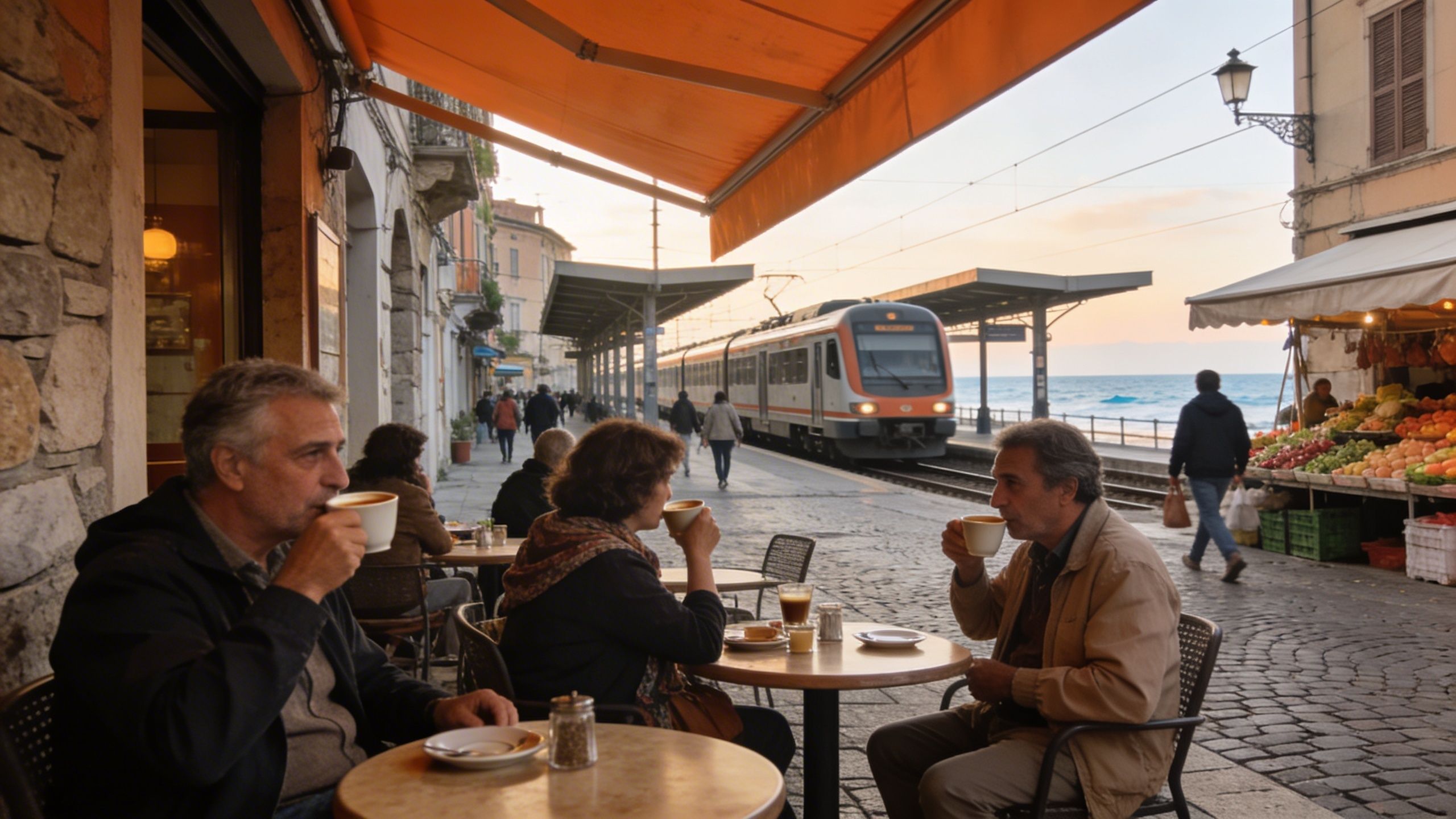
Imagine starting a morning in Italy with an espresso at Roscioli Caffè in Rome, catching a mid‑day Frecciarossa to Bologna for lunch, and finishing the week with weekend markets in a Ligurian fishing village — one country, many tempos. That dizzying variety is Italy’s selling point: compact cities with world‑class culture, coastal towns where summer and off‑season create different rental rhythms, and a transport spine that actually reshapes property values. This piece pairs the lived experience — the streets, markets and seasonal rituals — with concise infrastructure analysis so international buyers can marry lifestyle aims to realistic return expectations. (Sources: ISTAT tourism data; PNRR infrastructure plans).
Living the Italy lifestyle: compact, seasonal, connected

Daily life in Italy feels granular: mornings in neighborhood bars, long lunches near piazzas and localized rituals that differ block by block. Those small rhythms are economically meaningful for investors because demand is punctuated by festival calendars, weekend tourism flows and commuter patterns tied to reliable rail and road links. ISTAT’s 2024 figures show non‑resident nights rising and tourism concentrating in both big art cities and secondary destinations — a structural pattern buyers should map to transport and seasonality before committing. ([istat.it](https://www.istat.it/en/press-release/tourist-flows-fourth-quarter-2024/?utm_source=openai))
Local spotlight — Rome Trastevere & Testaccio vs. EUR
Walk Trastevere’s cobbled alleys at dusk: trattorie, tiny piazzas and a strong short‑let market near universities and nightlife. Contrast that with EUR, Rome’s business district, where modern offices anchor stable long‑let demand to professionals. Both deliver lifestyle appeal — but they imply different cashflow profiles: Trastevere yields seasonal short‑let upside with higher management costs; EUR offers steady corporate rents and fewer vacancy spikes.
Food, season and micro‑markets: winter markets to summer coastlines
Markets and food scenes animate demand across regions. In Naples and Puglia, year‑round market culture supports local rental demand; on the Amalfi Coast or Cinque Terre, summer seasons dominate. ISTAT shows that non‑resident nights make up over half of total nights — meaning coastal and art‑city properties can spike in revenue during high season but require stress‑testing for winter occupancy. ([istat.it](https://www.istat.it/en/press-release/tourist-flows-fourth-quarter-2024/?utm_source=openai))
- Pillars of Italian lifestyle that affect property demand: 1) daily bar/cafe culture near transit stops; 2) weekend market economies (e.g., Mercato di San Lorenzo, Florence); 3) festival calendars that drive short‑let spikes; 4) local culinary hubs where chefs and restaurants cluster; 5) sea/Alpine seasonality shifts.
Making the move: infrastructure that reprices returns

Lifestyle sells the dream but infrastructure makes the math. Italy’s amended National Recovery and Resilience Plan (PNRR) channels significant investment into rail, ports and digital connectivity — projects that historically translate into measurable property appreciation around upgraded nodes. Buyers should prioritise properties within clear catchment areas of planned upgrades rather than speculative corridors. ([reforms-investments.ec.europa.eu](https://reforms-investments.ec.europa.eu/italys-recovery-and-resilience-plan_en?utm_source=openai))
How high‑speed rail changes value: academic studies of Italy’s HSR show residential prices increase near upgraded stations while the effect on commercial and industrial assets varies by local economic context. That means a two‑hour‑commute city can become a de‑facto suburban market for Milan or Rome, changing rental yields and buyer pools perceptibly. ([sciencedirect.com](https://www.sciencedirect.com/science/article/pii/S0739885925001453?utm_source=openai))
Ports, logistics and the south: PNRR’s territorial tilt
The PNRR explicitly allocates a share of funds to southern regions and port/rail freight upgrades. For investors this matters: improved intermodal freight and port capacity can lift demand for light industrial and rental housing near logistics hubs — a different investment angle than coastal holiday lets. Local land‑use and 40% southern allocation mean some undervalued pockets may see outsized revaluation. ([opencoesione.gov.it](https://opencoesione.gov.it/en/PNRR/?utm_source=openai))
- How to prioritise infrastructure exposure (step‑by‑step): 1) map PNRR and regional transport milestones within 0–10 year horizons; 2) confirm station upgrades or new services (frequency matters more than a single new line); 3) estimate commuting-time shifts and recompute catchment radii; 4) reproject rental yields both for short‑lets and long‑lets under new connectivity assumptions; 5) stress‑test scenarios where upgrades are delayed or scaled back.
Insider knowledge: cultural quirks that reprice living and returns
Expats often underestimate cultural and regulatory friction: short‑let regulation moves fast in art cities, local tenants expect long notice periods, and community sentiment can drive municipal restrictions. GlobalPropertyGuide and local reports summarise price bands and common legal steps — but the real signal comes from visiting neighbourhoods at different times and talking to local agents about by‑law trends. ([globalpropertyguide.com](https://www.globalpropertyguide.com/europe/italy/buying-guide?utm_source=openai))
What expats wish they'd known about seasonality and neighbourhoods
Most buyers fall for postcard months. The contrarian truth: buy where local life happens off‑season. In Genoa and Bari, stable markets with local services generate consistent rental demand year‑round; in Positano or Taormina, short‑let peaks are intense but winter vacancy and higher operating costs lower net yields. Match your investor horizon — capital growth vs cashflow — to the rhythm of the place.
Hidden‑gem neighbourhoods few investors consider
Look beyond Florence and the Amalfi postcard: cities like Palermo, Bari and select towns in Umbria and Marche posted transaction growth and affordable prices in 2024–25. These markets pair lower entry prices per square metre with PNRR‑backed local improvements — a classic underpriced revalue story if you can tolerate longer holding periods. ([edilfin.com](https://www.edilfin.com/en/n-the-italian-real-estate-market-in-2025-between-recovery-and-new-challenges/?utm_source=openai))
- Investor considerations based on lifestyle + infrastructure: 1) prefer properties within 15–30 minute public transit of major nodes; 2) value diversified local economies (universities, hospitals, ports); 3) avoid single‑season coastal micro‑markets unless you price in vacancy and management; 4) prioritise walkable streets with daily amenities for stable long‑let demand.
Working with agencies: the role of local expertise
An agency that knows lifestyle patterns and infrastructure timelines is indispensable. Look for firms that provide: transaction history within neighbourhood micro‑markets, transparency on short‑let permitting, and networks for local management and renovation. Agencies should act as analysts — supplying comparable rents, cap‑rate estimates and realistic vacancy assumptions rather than glossy lifestyle brochures.
- Onboarding checklist for agency selection: 1) request 3‑year rental comps and vacancy figures for the street; 2) verify their local contractor and property management partners; 3) demand forecast scenarios that include infrastructure milestones; 4) insist on a written plan for compliance with municipal short‑let rules; 5) require references from international investors.
Italy sells a lifestyle — but buyers pay with time and due diligence. ISTAT’s tourism accounts and national recovery plans provide the hard data to stress‑test dreams: tourism volumes and public infrastructure funding are leading indicators of where demand will concentrate. Use those public datasets to model realistic rental income scenarios for both short and long lets. Then visit off‑season and talk to local managers. If the place still makes you want to stay, you’ve aligned lifestyle with infrastructure risk. ([istat.it](https://www.istat.it/en/press-release/tourism-satellite-account-for-italy-year-2023/?utm_source=openai))
The YieldistBritish expat who moved to the Algarve in 2014. Specializes in portfolio-focused analysis, yields, and tax planning for UK buyers investing abroad.
Related Articles
More insights that might interest you
 Villa Curated
 Villa Curated
 The Yieldist


